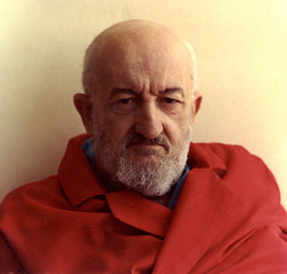
Thought, reason, and fear are the brakes that slow up our spiritual evolution
I met Lobsang Rampa in London in 1954. That was before he wrote his book "The Third Eye", and before he became known the world over. At the time, I was living in central London with my husband and our two small children in a pleasant Regency house just off Bayswater Road, opposite the last entrance To Kensington Gardens, going on from Hyde Park Corner towards Notting Hill Gate. Lobsang Rampa was known as Dr. Carl Ku’an then, and he later told me that his first glimpse of me was when I almost ran over him in Kensington Church Street. I have no recollection of that incident, which is probably why he almost lost his life that day; I simply did not see him. In those days it was entirely possible to drive around London quite fast, and that was how I was accustomed to drive my little car.
There was a garden at the back of our house, and at the end of the garden we had the usual garage, accessible from the mews running at the back of the houses. We had built a flat above our garage to accommodate a general help. Nowadays such help would be referred to as a housekeeper, but at that time the word housekeeper was generally reserved for a woman who ran a household, perhaps that of a wealthy bachelor, or alternatively it would refer to a very able woman who presided over a large household on a par with the butler. We were not that grand. We had a general help, and it was in the flat of our general help, above the garage, that I first met Dr. Carl Ku’an. It was a meeting I have not forgotten, and never shall.
 25 Years with T. Lobsang Rampa - Sheelagh's first book. Sheelagh informs us about the time she first met Dr Rampa, the struggles they all endured during their numerous travels, especially against the press whose only interest is in selling newspapers at any cost. The lamented sudden death of feline Fifi Greywhiskers and how Sheelagh had to split company with Dr Rampa so he could depart to the heavenly fields. This is not an autobiography of Dr Rampa; it is a privileged insight into their very private lives through Sheelagh's eyes and experiences. Purchase via Lulu links below.
Two options to purchase Paperback or eBook
 Grace, the World of Rampa - After publishing her memories about twenty-five years beside Lobsang Rampa this is a continuation of that story. A marvellous essay in which Sheelagh Rouse offers further insight into the very private life of Dr Rampa and his very clear views on helping others. Buttercup also clarifies once and for all the many scandalous rumours that have circulated over the years regarding Dr Rampa. A ‘must read’ for everyone. Purchase via Lulu links below.
There is the options to purchase Paperback or the free eBook or just read it here...
* * * * * * * * * * * *
Grace, the World of Rampa
Following that initial meeting I became acquainted with him gradually over the course of a few months since he appeared to call on my helper regularly. After his visits to her I would spot him in our garage with a cardboard box in his hand into which he would be putting spiders to feed his Myna bird, and I wondered at the time if this was the main purpose of his visits to my helper, the searching out of food for his pet bird, as I could see no other reason why he should be wasting his time on a woman who, by my standards, had little to offer in the way of intelligent conversation, the sort of conversation that might make his visits worthwhile. As I say, I got to know him little by little in this way, in the garage searching for spiders and other insects, but it was not until he was well into writing "The Third Eye" that I visited him and his wife in the one room they occupied. This visit stands out in my memory for more than one reason.
In the first case, they were poor, at that time very poor, through no fault of their own. They had changed their name to Rampa by this time. It had been suggested to him that he should write a book about his early life as a lama in Tibet, and after his initial refusal he had realized that perhaps there was no other way to make a living, and so, with reluctance, he had agreed. He felt it necessary to write under a nom de plume, and had legally changed his name from Carl Ku’an to Tuesday Lobsang Rampa. The book was progressing, and by the time I first visited things were improving a little because he was receiving some advance payments from the publisher, but not enough yet to make it possible to move to a better location
I was quite accustomed to visiting poor people in the country where I was brought up, but city poverty is of a different nature altogether. I am talking about the Bayswater district of London where the Rampa’s lived in one of those bleak, grey Victorian row houses that had seen better days and now were falling into decay and disrepute, inhabited by perhaps twelve or more people who lived their lives in one room, who may have had a meagre wage from a wretched job, or may have had no job at all and were managing somehow. Life was a perpetual struggle for them there was little enjoyment in it. Food was scarce, and what they did manage to scrape together provided minimal nourishment. The one room they slept, cooked, ate, and existed in was heated by a gas fire with a meter which hungrily made short shrift of any spare change they may have saved up in the expectation of an hour or two of heat to comfort their frail bodies and dry their clothing, They shared a bath and lavatory with others, and had to wait their turn and put up with the filth left behind by the first comers, the scum round the bathtub, the dirt and sputum in the washbasin, the lavatory left unflushed. This was the backdrop of the Rampas’ lives when I first visited. It was new to me and a little shocking.
Their own room, however, was different. Even though poorly furnished it imparted none of the depressing elements described above, it was as though they had risen above their surroundings and carved their own unique existence out of the rough, cold stone, an existence that was welcoming, peaceful and whole. As one entered their room from the gloomy landing on the first floor the difference was startlingly apparent. First of all, there was the incense. They could not really afford incense at that time, at the time of my first visit, on a regular basis, but that one stick was lit for my coming. Perhaps that is why it made such an unforgettable impression.
When I think of Lobsang Rampa it is insistently and consistently the same, the incense that comes back, the aroma of it in my nostrils as I remember him. Common-sense and logic tells me it is only in my imagination, I am not really smelling the incense, common-sense and logic tells me that would be impossible. Nevertheless, imagination is a real and powerful thing not to be under-estimated, and as I seem to smell the incense so I can see him in my mind’s eye, picture him clearly, his solid body and strong arms, his shaven head and slight beard which hides a disfigured jaw. I see him as he takes the thick, long stick from the round metal container, holds it in his hand as he lights it with a match, contemplates it for a moment, then, gently blowing out the flame, sets it in the small brass holder at his bedside. The smokey grey vapour, rising and swirling, leaves tranquillity and peace, raises our vibrations, permeates our beings.
On that first day, Ra’ab, his wife, had opened the front door to me and led the way up the dingy staircase to the first floor. I had met her previously but scarcely knew her, she was different from the type of woman I normally associated with, and I failed to place her in my somewhat limited category. I found her reactions were slightly unusual, with an edge hard to analyse. Nevertheless, she was the wife of a man I had come to respect profoundly and as such I treated her with the same respect, which was perhaps a mistake. I was apprehensive. The place felt unwholesome. It was shabby and smelled of stale food, and to make matters worse each stair creaked as I stepped on it, causing the sensation of total collapse at a moment’s notice. Arriving at the top, she opened one of the three brown doors giving onto the landing and led the way into their room. Dr. Rampa was resting with his feet up on a narrow bed, a small sealpoint Siamese cat curled up on his lap.
He was habitually correct in dress, and whenever I had encountered him previously he had worn a black suit with a pink or blue shirt and a black bow tie. His shoes were of the unlaced variety, the kind one slips on or gets into with the help of a shoe horn, and I later discovered this was because bending was difficult if not impossible for him. On this day he was at home and informal, and was wearing a dark red comfortable dressing gown in place of his jacket, and house slippers on his grey sock clad feet. I was invited to take one of the two chairs in the room, the other being occupied by a blue rug folded as a bed which I guessed belonged to the Siamese cat when not resting on a lap. I remember remarking in my mind that the other chair looked rather more comfortable than the one I was to take, and in the course of time I was to discover that this was a perfectly normal state of affairs. I cannot remember ever being actually uncomfortable throughout the years I was to live with the Rampas, although I was frequently asked to move from the better chair in the room so some Siamese cat could occupy what was regarded as their rightful place. The Myna bird was no longer with them, having succumbed to the neglect it suffered before Dr. Rampa discovered it. The sealpoint Siamese was their only pet.
I settled myself, removing my gloves as I sat down, and placing them with my handbag on the floor beside me. Ra’ab had the kettle on the gas stove and already it was boiling away quite merrily. Reaching for a large brown teapot from a shelf above the stove, she took a teaspoon from the sink and measured out three spoonful’s of tea leaves from a rather battered, octagonal tin perched on the side of the sink, one of those tins decorated in the Eastern manner and customarily given as a gift at Christmastime filled with tea, a tea caddy. She poured the boiling water into the pot, all the while the little cat sleeping soundly and no one making any effort to converse - there was really no need to focussing attention on the tea-making was calming in itself, it was almost a ritual. I assumed they drank a great deal of tea during the course of each day. When food was in short supply the tea would assuage their hunger for a while.
Tea making in Tibet would have been quite different. I knew that from reading the draft of "The Third Eye" chapter by chapter as it was written. I knew that in Tibet large blocks of tea from India or China were brought through the mountain passes on ponies by traders, and in the lamaseries the blocks would to be broken up by the monks and thrown into a huge cauldron of boiling water. Salt was added, and soda, and when it had all boiled up again shovelfuls of clarified butter were loaded into the mixture and the whole lot left to boil for hours. As Ra’ab made our tea that day it crossed my mind how different life in Tibet must have been, how hard it must be to fit into our Western culture, and how well Dr. Rampa achieved the business of living in Rome as the Romans do. I knew he was reluctant to write about his childhood and early manhood as a lama in Tibet because even then, at the very start, he knew it would bring fame and adulation, notoriety and disbelief, but at this point, after many attempts to find work, there was no other choice. He had to survive and survival required an income.
Sitting there it occurred to me that I had never felt so relaxed in new surroundings. This was the second memorable point of the visit, to be sitting quietly in unfamiliar surroundings, visiting for the first time, and feeling completely at home, turning thoughts over in my own mind as the tea was prepared. This was significant. Acute shyness loomed as a black cloud on the horizon of my life. It is true I had successfully overcome the crippling stammer suffered as a child, but that stammer was merely a symptom of the uncertainty that still plagued my life, still left me in a state of internal turmoil and confusion when called upon to perform social duties, cover up and appear in control. In the presence of Dr. Rampa, this lama from Tibet, it was quite different. There was something about him that annulled the fears and the anxiety it all simply melted away like morning mist before the rising sun. To be within his radius imparted a magical feeling, one was drawn into an all-enveloping aura of security and warmth, and experienced the kind of contentment that comes from finding oneself adjusted, aligned, in tune. I suppose, in fact, that that is exactly what it was. I use the word magical because it was an unknown quantity. What was happening was not yet understood by science and it would be some time before it was.
Before relating the third unforgettable incident that day, let me tell you how I come to be conjuring up these memories at all. It happened like this:
A Reader who has since become a good friend and who liked my book telling of the years I spent at Dr. Rampa’s side, wrote not too long ago asking if I could write about the latter’s kindness and generosity. In the letter my Reader said, "We appreciate that Dr. Rampa helped numerous people during his travels, and whilst we don’t wish to delve into his private affairs, our curiosity gets the better of us, as reading about these events would give us much pleasure. Knowing the joy your first book gave us, would you ever write a second highlighting such generosity?" A delightful and persuasive way of putting it and while strongly tempted, yet I still felt unable to undertake such a task. I have never kept notes or a diary, how could I ever remember all the kindnesses, all the generosity, all the graciousness of Dr. Rampa’s life? I felt it would be impossible, and even if I was able to remember, it was improbable that I would be able to write it in a readable, interesting way. Generosity and kindness was an everyday state of affairs with him, it was his way of life. Putting it into words would not be easy - it just WAS. Over several months, however, I thought about the idea and decided that perhaps he was right after all, this caring Reader, perhaps it would give pleasure to others if I were, even in a small way, to attempt to sketch the grace of the world of Rampa, even if a trace of it were to filter through in the stories I am going to tell you, even a tiny trace, it would be enough. And I shall try.
The tea was made and left to brew for a few minutes. We continued in companionable silence. The room was simple, two narrow beds separated by a screen, two chairs, and what must have been a card table beside Dr. Rampa’s bed, covered with a cloth and holding a small, rather old radio, a clock, the brass incense holder and a torch. There was a simple chest of drawers, and on the floor sat a manual typewriter and a stack of paper. In a corner there was another small rickety table holding an object covered by a black cloth. I later learned that this was a crystal of great purity which he used for scrying, or crystal gazing. It was, as I say, a simple room, a poor room but not poverty stricken. There was a well-rounded feeling here. Even if life on a material level was out of kilter for the Rampa’s through lack of money, on the higher level on which they seemingly lived, all was well with the world.
Ra’ab handed me my tea. It was already with milk and sugar was not offered. This was how tea was served and drunk in their house. I remember finding that rather intriguing at home we poured the tea and handed milk, lemon and sugar separately allowing the guest the choice, but here there was only one way, there was no effort to impress, no difference because a guest was present. This was how it was - take it or leave it. I rather liked that. I took tea with lemon at home, but I enjoyed this tea, it was different.
We began to discuss the book he was writing, the book he had entitled "The Third Eye". As he was explaining something to me in his quiet, rather slow, carefully enunciated voice my mind all of a sudden was distracted by a sound, just a faint, almost imperceptible sound, like someone crying or whimpering. Then almost at once it was stifled as though a hand or handkerchief was placed over the mouth. We continued our discussion. In a few moments the sound came again, louder this time. There was no mistaking it, it was someone crying, sobbing, and it was coming from outside the room. I looked at Dr Rampa but he appeared oblivious. I looked at Ra’ab and she seemed annoyed, impatient. "We’ll have to do something about her, Chen," she said, "she’s at the door again, crying."
"Is she? Do you mind telling her I’ll look in on her soon, Ra’ab." I knew he was almost completely deaf, and he clearly had not heard the sound because his mind was centred on our conversation and on my reactions. He did not know me well at that time and it was necessary for him to concentrate deeply in order to follow my conversation due to his lack of hearing. As he became accustomed to a person it was easier for him, he familiarized himself with the patterns of that individual’s mind and thus less concentration was required. He was clairvoyant to a very unusual degree, but to deal with more than one stranger at a time was an enormous strain for him. He relied on his powers of thought reading and lip reading when conversing, but one has to remember that we often are thinking something entirely different from that which we are actually saying, which complicates matters somewhat from the point of view of a clairvoyant.
He continued his discussion as though nothing untoward had happened, while Ra’ab went to the door, opening it just sufficiently to allow her to leave the room, and closing it behind her. I confess to a sense of excitement, there was the possibility of some dreadful scene unfolding outside the closed door. It was unlike anything that could ever have occurred at home. In my well-ordered, well-bred world drama of this kind simply did not happened, people did not go around sobbing outside other peoples’ doors, they suffered in silence, even though perhaps quite as acutely. I held my breath in expectation.
Ra’ab returned to the room, seated herself on the end of the bed and took up her tea saying nothing. I relaxed and took up my teacup as she had done maybe this kind of thing was an everyday occurrence here, maybe people were being murdered, fainting, crying at doors, and who-knows-what else besides in broad daylight here. My imagination was in full swing, and it was with some difficulty that I returned my mind to Dr. Rampa and our discussion.
Soon it was time for me to leave. My dog was unwell at home, I was anxious to get back to him. I asked Dr. Rampa not to rise, and took his hand to bid him farewell. "Goodbye, it was so nice to see you - Chen." He had invited my husband and me to use the name he was known by to close friends a few weeks previously, but it still did not flow easily. After a firm, warm handshake, he mentioned that there was a hitch with the book at the publishing house someone was casting doubts on its authenticity. He made light of it, but one could tell it was troublesome. I left with Ra’ab, promising to come again soon.
On the landing I glanced at the other two brown doors but they remained firmly closed, guarding whatever dark secrets their interiors might possess. It was not easy to see the staircase in the gloom, and as I looked down I saw a trail of what could only be blood, still bright, a shiny dark red, not yet dry, leading from the door on the far side of the landing to the one we had just left. I grabbed Ra’ab’s arm, pointing, "Look - blood!"
She shrugged. "Yes, I’ll have to clean it up before the landlady sees it. She’s a horror."
"But - well, what can have happened? Someone must be hurt. Its horrid, Ra’ab!"
"Oh, its just that girl, the man she works for, they fight. Then she gets pregnant and - well, its a long story. If the landlady knew a half of it she’d put her out. The girl has nowhere to go. We do what can for her. It’s not her fault and she’s all alone in the world." We reached the hallway and Ra’ab unlocked the front door. "I’ll come with you to the corner, I have to make some phone calls," she said.
It was no distance to the corner. I had been uneasy on my way here, it was new territory, life in the raw, the other side of the tracks. I had felt overdressed, ill at ease, and now with Ra’ab by my side it was little better, but at least curiosity overcame my self-consciousness. "What can you do to help the girl, Ra’ab, and why do you try? There are places for people like that she’ll only pull you down. Surely Chen has to get on with his book, not be bothered by such undesirables as her." Even as I spoke I could feel her disapproval. She turned and looked at me evenly, almost with hostility.
"You’re inexperienced you don’t have any idea about real life. Not everyone is born with a silver spoon in their mouth as you were. Now I must leave you." She stepped into the phone box as she spoke, busily pulling out the directory, and started to find the number she wanted, jingling the coins in her pocket. It was a curt dismissal. I turned away, somewhat chastened, but determined to talk to Chen about it next time I saw him, and as it happened I did not have long to wait.
A week or two later I was coming out of Fuller’s tea shop with a cake box in my hand when I ran into him walking down Queensway from Bayswater Road. We greeted each other and stood for a few minutes chatting, then I remembered that I really wanted to ask him about his part in associating with these women, women whom I saw as undesirables and worthless. In truth it was none of my business, but I felt compelled to broach the subject. There was the woman who lived on the same floor as he did, and then there was my ex-helper whom he had so regularly visited. "Why don’t you come home with me for a cup of tea?" I asked. "I have a friend coming up from the country this evening for a few days and she adores Fuller’s cakes. I’m sure she wouldn’t mind us sampling this one". We set off down Queensway together, turning left at Moscow Road and left again into St. Petersburgh Place, where we lived. Both my children were attending school so we were able to sit undisturbed in the drawing room with our tea. Knowing it was difficult for him to sit in an upholstered chair or a sofa for any length of time, so I pulled up a hard back chair which appeared to suit him reasonably well.
The subject of my ex-helper came up easily enough. I had had to dismiss her and had been a little concerned that he may see it as harsh on my part, particularly as he, according to her, "was a gentleman who helped me more than anyone ever before".
"You know, Chen, I have been wondering what Mrs W. meant when she told me repeatedly how much you helped her. What did you do for her? And, even more puzzling to me, why did you help her?" I paused, wondering if I was going a bit too far, but he seemed calm and somehow waiting for me to go on, so I continued, "Personally, I found her useless and - well - let’s be blunt - an out-and-out liar into the bargain. The stories she invented were astonishing! It was comic in one way that she expected me to believe her, and at first I did, which must have given her free rein to get going on a really big scale. The important people she professed to know! Why, she had a catalogue of all the aristocrats in Yorkshire, the places she had been, the things - -well, none of it matters, but I’m curious, I must confess, as to why you wasted time on her".
He said nothing for a moment but sat silently, almost making me doubt my position. But how could I doubt it? I knew the woman was insane.
"You have to realise that I see differently from you people". "You people," was a favourite expression of his, one he used frequently, leading one to the assumption that he knew himself to be an outsider. I was well aware by this time that he was clairvoyant, that he could see auras, read thoughts he could look into the past and the future with accuracy.
Although I knew virtually nothing about psychic matters then, I realised that life must be very different for him than for the average person. I passed him a cup of tea with milk, just as he drank it at home. He took a sip, and went on, "I can see a person as they REALLY are, not just as they seem to be superficially. Let us say that I can see the soul of a person. Life is a stage, you know, as Shakespeare tells you, and people are as actors living first one life and then another. In one life they could be a beggar, in the next they could be a prince or a princess - yes, we even change sexes to fulfil what we have to learn in each life. But I can see beyond the actor in each person, I can see their real value - or lack of it". He paused to allow me to digest what he was saying. Although so advanced himself, he realised how little I knew, how this was all strange to me and was not immediately understandable or acceptable.
"Do you think then that Mrs. W. was worthy of your time? I find this hard to believe!" I was appalled to even think of her as being worthy. She was an uneducated working-class woman, and not even an honest one at that.
"Do you not think she had any worth?" He asked quietly. "Well, the value YOU place on a person is based on how they present themselves, in other words what school they have attended, what their social standing is and that of their family, if they speak in a cultured way, the clothes they wear, their mannerisms, and so on". It was said without criticism, he was merely stating a fact, and if it was offensive that was not his intention. "I, on the other hand," he went on, "do not have the advantage of knowing precisely how they should appear in order to pass your test of worthiness. I see what they have achieved in a spiritual sense through their lives on earth, I see what they have set themselves to learn in this life. Most times life is too hard, people set themselves impossible lessons and tasks, they take on too much without taking into consideration the setbacks they are going to encounter on earth".
I was nonplussed. I had to accept the truth of what he was saying regarding my standards, but at the same time I felt it necessary to defend them. Our whole system depended on those standards. Judicially, however, I said nothing.
He smiled, "I see I have upset you, but I am only trying to explain to you why I tried to steer your ex-helper onto a path she could handle. Does it sound like interference? It wasn’t. She is sufficiently evolved to recognise that I was different, that I could help her, so she sought my assistance. One cannot turn aside when one is asked to help and when there is hope. It’s a burden to be psychic, you know, it’s a responsibility that has to be shouldered. And there was hope, a slim hope, but still hope, so I tried. She failed several times, and I tried again, but finally - it was enough. There was no point then in going on with her because she wasn’t making a sincere effort. If a person seeks help and then rejects it, or fails, it isn’t a good thing - not a good thing for them. It’s like slipping back on the ladder of evolution. If you seek help you have to be serious, you have to intend to follow the Path, and you have to make a sincere effort".
"I see. And what about the other woman, the one next door to you? Is she the same sort?"
"No, not really. She’s a victim. She never had a chance and took more or less the only road offered to such women as being a way to make a living. She got in with an unscrupulous man who uses her. It’s the old, old story. Sex, emotional blackmail, hopelessness. Ra’ab and I do what we can for her just because one has to, to let her see that there are better things in life. It may stick somewhere in her mind, one day when she’s on the brink of utter despair she may remember. You can’t just pass by and do nothing. She didn’t seek my help in the same way. It is said that a Buddhist on seeing a drowning man should not interfere, should allow him to drown and fulfil his destiny or work out his kharma. Well, I am a Buddhist, but I am also highly clairvoyant and can see more clearly that most. To offer a hand to this woman is humane. It won’t alter her lifestyle or her choice of lessons in life, but it may give her hope in her darkest hour".
"But you have better and more important things to do! You’re wasting your time".
"Do you think so? If you could see as I can you might think about it differently - at least I hope you would. He smiled his characteristic smile, almost with his eyes alone, bringing us back to a balanced even keel. There is so much negative force at work in the world, so much that is difficult to face because it is too distressing. People in your position don’t see it, or if they do they turn their back and ignore. I can’t do that because I feel it too acutely and see it too clearly".
I sat silently, thinking about what he had said. There was another side to it. Even if I wanted to do something to help the prostitute living next door to him, she would not want my help, her reaction would be to distrust and dislike me. There would be no common meeting ground. Was it because, as Ra’ab had said, I was inexperienced, born fortunate, or was there simply too great a discrepancy between that poor woman and myself? Yet Chen was able to meet her on a level just as he could meet me on a level. He was superior to us both. In that moment our status system appeared as pathetic and fragile as a house of cards, it could tumble in a moment without trace. I pulled myself together. I was on dangerous ground.
"You haven’t tried the cake". I took the plate and offered him a piece.
"No, thank you, I have to be on my way". He placed his cup and saucer on the small table between us and rose to leave. "I’m glad I saw you, and thank you for the tea. Your children will be returning home soon, and I have to get back to the book. Its coming along slowly - but surely".
We walked to the garden gate together and shook hands warmly. "Don’t be upset by our conversation. There is so much to learn in life, so much more to see once we get under the surface".
He was right. More to learn, so much more, and even more to see under the surface. Just how much, I had no idea then.
* * * * * * * * * * * *
Memory is interesting. Take a written account of some event you recorded when it happened fifty years ago and it will be different from an account you might write today of the same event, an account you write from memory. It is very true that memory softens, tends to ignore unpleasantness, memory is like an impressionist painting, it mitigates harsh reality making it more acceptable. By the same token, however, events seen from the distance of time are viewed with less emotion, put in their rightful place very often with greater insight. Writing from memory is devoid of strong, unreasonable emotion. The writer by this time is detached and can be a more objective and perhaps a more accurate historian. I make this point because it has been suggested that my writing could be clouded and inaccurate. As I look back I see a story, an adventure, a history of happenings that is called my life, and as I look back on it I see it with greater clarity, not in any way clouded or inaccurate, quite the reverse, I see it now with eyes fully opened, I see it with more tolerance for the hardships, more understanding of the reasons why. We all have stories of our lives and only because my story involves a remarkable person does it become of interest and value to others. And because so much regarding that remarkable person - Lobsang Rampa -has been a misrepresentation, it is vital that I give a true and honest account, even if it may shatter the idealistic notions of some and the misinformed judgement of others.
Another of my readers and friends remarked a little while ago that it must have been hard to appreciate Dr. Rampa when one was so close to him, and to see him from afar must be much more apt. This friend is absolutely right, it was hard to fully appreciate him at the time because it would have created a barrier and not allowed a normal family life such as we lived. But at this distance in time so many years after I can see with heightened sensitivity and understanding how onerous his life must have been, how much he suffered silently, how little he could explain, even to us whom he regarded as his family.
It must have been in 1956 that I went to live with the Rampas. I can say that because it was around the time "The Third Eye" was published. Our shared domicile was not intended as a permanent arrangement, it was more to allow me to become established in a new life, to make a new beginning after a broken marriage. At the time the extent of Chen’s assistance, although appreciated, was taken for granted and it is only now, seen from the distance of fifty years, that the enormity of it becomes apparent. The reason it was not so clearly seen at the time and the reason it was so easy to accept was his manner of giving. That was the beauty of it - and the rarity. What he did for me, and for other people like me who find themselves in a seemingly impossible situation, was not an act of charity, not something one needed or was expected to be grateful for, not a kindness in the usual sense of the word. It was an act of love and love demands no return. It was not pity because kindnesses bestowed as a result of pity are demeaning to the recipient, and it is safe to say that no one was ever reduced to that level by him. He gave with grace, freely and gladly, a wonderful, open giving of himself. And so it was that acceptance became the most natural thing in the world, the easiest and the most joyous.
It occurs to me now that he probably saw little if any difference between myself and the two women mentioned previously. We were all human beings who were floundering, mired down in the bog of life, unable to pull ourselves up just as a seabird will struggle, its beautiful wings coated with tar and oil spilled from ships, unable to fly and doomed to a certain death. But our similarity, we three women, was not apparent to me then. My standards were as artificial and questionable as manmade fabrics, having little relation to reality or laws of nature, manmade standards - worse, manmade by a small and select group. I regarded myself as vastly superior to the other two women. That was how I saw it, if I ever thought about it at all, and I probably didn’t think about it because it was simply a given fact - to me that is! I can only assume that it was a stroke of luck, or possibly a greater need than theirs on my part, that allowed me to forge ahead. I remained with the Rampas, becoming a member of their family and household, for twenty-five years.
But we are talking about giving, aren’t we, about the grace of giving, about the world of Rampa. And the sort of giving I am talking about is not of the material kind, although there was plenty of that too. What I am talking about now is the real opening up, going out to meet the other person on an equal footing, a selfless, uplifting kind of giving. It is one thing to see a poor wretch on the street corner and to throw him or her a coin, even a coat or a pair of gloves, we think we haven’t done too badly, we have shown kindness, we can pat ourselves on the back and walk on complacently happy. But it is another thing to approach the beggar, to engage, to sit in the same place on the sidewalk, to spend time to walk down the street to a cafe and take food together. And then to return the next day, and the next, until a trust has been established. That is the kind of giving I am talking about, that was the world of Rampa, that was the sort of thing he did because he was free of bias and false values. How many of us, though, are capable of doing that even if we wanted to. Most of us are weighed down with the burden of habit, respectability, keeping our own little place in the world intact and unsullied by the needy, the place we have perhaps fought so hard to achieve, the tenuous grasp we have on the "good things". There is always the awful thought that by lowering ourselves to the level of the beggar we will never get back up again to that artificial status we have created for ourselves, we might be forever stained in the eyes of the world.
Lobsang Rampa understood very well that sense of holding back which prevents most of us from truly giving, that fear that in so doing we will lose something ourselves. He understood it as an almost insurmountable block to ever making any real progress in a spiritual sense, and he lamented it. I think perhaps that was part of his plan - to constantly give of himself freely and openly, hoping that it would become an example, that it would be passed on, and passed on, again and again. It is a fact that after living with him for a time and experiencing his sincerity and humanity, one was able to be more open, more giving, and therefore more contented and less fearful.
We were living in London when "The Third Eye" came out, and it must have been a landmark for the Rampas because their lives were changed in many ways by the publication of the book. There was the possibility now of getting on with the aura work that was his life’s mission, there would be money to buy cameras, film, all the things he needed for his research work into the human aura. We took a decent furnished flat together for a few months, and we were neither hungry nor cold, as they must have been previously. But despite the preoccupations he certainly had, and the extra work connected with the publication, he concentrated a tremendous amount of time and energy on taking care of me. As I said, I took it as a matter of course, easily, and that was how he intended it to be. But without the constant care, the daily walks and talks, the friendship and conversation, I would have fallen into a deep morass of depression I know that now for a certainty. And a deep depression can become a lifelong affair, maybe controlled by medication and therapies, but nevertheless a permanent damaging of the brain and alteration of the body chemistry. I did not suffer any such illness, I emerged as sane as most people, more balanced and better able to function than I had ever been.
On our frequent outings together I saw parts of London I had never seen before in spite of having lived in the city since my teens. We took buses and we walked, and on the buses we sat on the upper deck, at the back if possible as that was where he liked to be. He liked to watch the different people coming up and emerging at the top of the stairs, first a head then the body, hanging on as the bus lurched on its way. Once a small child was carried up the stairs, a difficult job as anyone will know who rides the London buses, a child who was crippled and twisted. I had small children of my own, and as I looked at him my heart went out to this small disadvantaged child. What sort of life was in store for him? It seemed dreadfully unfair to begin life a cripple.
"I see you feel pity for him, Sheelagh", Chen said.
"How do you know I feel sorry for him?" I was astonished. I had said nothing.
"Your colours. Your colours show your feelings". He was talking about the colours of my aura, those ever-changing colours that swirl around us and can indicate emotions to a psychic who can perceive them. "But you have to remember that the child probably chose his disability for some specific reason, for something he wanted to learn in life".
"So are we not supposed to feel pity then?" I watched as the father took a seat near the front of the bus, settling the boy on his lap.
"Pity? Pity isn’t a good thing, it’s demeaning. Automatically most people will feel sadness when confronted with suffering, and perhaps want to help. But you should never help unless asked because that would be interfering with the chosen path of another person and perhaps denying them the chance to learn what they decided to learn in this particular life". I could see he was in a mood to talk. We were going out to Richmond, and so had time enough.
"According to my belief", he continued, "we decide in the astral, before being born to each life, what we need to learn in the life about to commence. If the obstacles you choose turn out to be worse than you had anticipated - and they often do - and you are struggling but still somehow managing, and someone comes along and says, ‘Oh, it’s too hard for you, I’ll take on some of your burden,’ that isn’t a good thing at all, it’s a hindrance, actually, more than a help, it’s completely upsetting your plan of the lessons you want to learn. But suppose you accept the unsolicited help, anyway, the offer might seem too good to refuse and you see no reason why you should keep struggling because, remember, you don’t know consciously about your plan, you don’t know consciously that you planned these obstacles. If you can astral travel, if you are psychic and can see further than our three dimensional world, you would know, but we are assuming you are not psychic and you don’t travel consciously in the astral. So you take the easy path".
"Somehow, though, life then becomes pointless, you feel frustrated but you don’t know why. You live your allotted lifespan and the end comes, you die and the Silver Cord is severed, you return to the astral, leaving the earth body behind just like an old suit of clothes. Then once in the astral where you can see things clearly, you see that your life was wasted, you realise you have to return to earth to try the same lessons all over again. You have to start again with the same obstacles, so you have, in effect lived a wasted life by accepting that unsolicited help which was thrust upon you".
"Yes, we’ve talked a little about that before". It was a subject he obviously felt was important that I understand, a cornerstone on which many facets of occult lore rested. "I understand what you say, but Chen, it’s quite hard really, you know, to take in these things, it’s so different from normal Western thought, although, I must admit it does answer vague questions and worries in my mind". I was silent for a minute or two. The bus stopped and started again. I was still thinking about the child, and the importance of not interfering with people unless asked. "But isn’t it a natural reaction of anyone with even minimal good manners to, let’s say, get up and give one’s seat to a disabled person, or to hold open the door for him? Surely there’s nothing wrong with that".
"No, of course not. I’m talking about help of a different order, not just, as you rightly say, consideration for others. However, at the same time you should remember that there are many disabled or elderly people with a sort of false pride who can turn on you if you offer them even the smallest consideration. You know, a kind of ‘I can do it myself‘ attitude, but that’s their bitterness and lack of understanding of their disability. It shouldn’t put you off, though, there are still many who are grateful".
I could see this business of helping others was not so easy. What if they wanted help but were too shy to ask? What if they didn’t know how to ask? And then again, you can’t just go out and help people like a do-gooder who is a nuisance as a rule. I reasoned that to have the opportunity to help someone is quite a privilege, so when that chance comes along you jolly well have to take it because another chance might be slow in coming.
There were a host of things we talked about at that time. Somehow then there was more time for discussions. Later on, as he became well known and was constantly bombarded with letters and questions, it became more difficult to talk at home about one’s own questions and theories. The learning then came through replies to others. Those first few months were the real beginning of my awareness of matters beyond the mundane, and the fact that he chose to initiate me before my old world had collapsed irrevocably, and that he made time then to concentrate so much energy on my education, was what saved me. I had so much to think about, I was able to get things more in proportion, to sort things out. The way he was passing on his knowledge now when we were living together was more serious and condensed than previously when we met only occasionally. The great thing was that my mind was kept so constantly occupied during those early days that there was no time to mope, no time to regret things left behind, my mind was focussed on the future and on things bigger than myself. As I see it now, it was a well thought out system on his part of getting me through an otherwise disastrous period of my life. If someone is depressed or despondent or grieving, it is fatal to centre on oneself and to self-analyse. It is only by getting away from self that healing can be established and accomplished.
To digress for a moment, I have a friend who, in good faith, advised me when I was writing about Dr. Rampa that I needed to tell the reader all the negative things about him and my life with him. According to my friend - and I am sure there is a great deal of truth in this - no one likes to read all good stuff, it becomes boring and even suspect. What the reader craves is sensation, the dark, hidden truths, and everyone, so my friend told me, has a bad side that should in all honesty be exposed, that is what would make my book interesting, that is what would sell it, the dark side that no one but me would know. But, although I knew very well that the advice was well meant, there was very little I could find to say that might be so enticing as to make my book truly interesting! Plenty of myths have been circulated about Lobsang Rampa, plenty of harsh criticisms, but very little fact simply because hardly anyone knew him. Like any outstanding and brilliant person with a complex makeup he had many sides to his nature, and it was not always easy to understand him. He himself did recognise that he was unlike other people, and he made an effort to be amenable and tractable. He needed a lot of time alone, and it was during that time that he was able to stabilise and renew resources.
Some people, perhaps most, who are in the public eye make a point of never reading reviews or articles written about them, either good or bad, and we were no exception to that rule, so it was not until fairly recently that I became aware of some of the extraordinary things attributed to Chen, in fact to the three of us, that were so divorced from the truth as to be ludicrous. Things purporting to have been done and said by him, lurid orgies held in our house, and so on, descriptions of his personality which had nothing to do with reality. He was described on book covers as a mystic, and this admittedly does give rise to all sorts of interpretations. As well, the false impressions may have been partly his own doing. Let me explain what I mean:
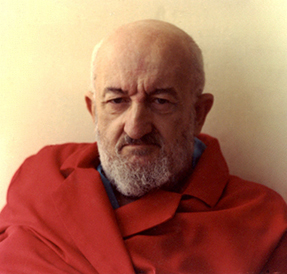
There are photographs of him and drawings taken from these images which portray him as menacing or weird. He had the habit, when posing for advertising purposes and the like, of adopting a stern, forbidding expression, quite unlike his usual kindly gaze. For all we know and for some reason of his own, perhaps as a kind of defence, he may have wished his public persona to appear that way, although stern is one thing and menacing is another which I feel sure he did not wish to convey, and it was far removed from the way he was in private life. He could be firm and even frightening if the occasion warranted it, but that was not normal everyday behaviour for him. It is more than possible, then, that some of the extraordinary reports about him stem from those early photographs. As we all know, the paperback book covers are sensational in the extreme, but he had no control over them. He was never shown a cover before publication, never consulted about the blurb appearing on the covers, but the publishers obviously were of the same mind as my well meaning friend - the public like sensation, and the more sensational the better.
Another aspect of the same thing, a false and misleading impression, was his voice. In general the human speaking voice is a good indicator of personality and character. If you hear a voice before meeting the person, you can make a very accurate assessment of who you will be confronting when the meeting finally materialises. In his case, as we know, his mouth and jaw had been severely and brutally damaged by Japanese boots in a prisoner-of-war camp, in other words by savage kicking, and I always felt that his vocal chords were similarly ravaged or altered through cruelty, that he had been kicked around the neck area as well, because his voice lacked the resonance and depth I felt it would have possessed originally. He spoke quietly, which almost certainly would have been natural to him, but his voice was thin which was utterly unnatural for his personality. When he spoke or made recordings for people outside the family, he made a conscious effort to control his voice and to give it the strength and depth that it now lacked, and to a perceptive listener it must have been apparent that he was making an effort. His voice came across poorly and sounded forced, and the listener may well have questioned why. Being aware that he lacked the ability to speak as he would have done prior to the torture, he strove to recreate the voice, but in so doing he instead created a misleading impression of someone trying to make an impression.
As I say, it was only recently that I became cognizant of some of the nonsense circulated about him. For instance, it has been reported that Lobsang Rampa was gocentric, domineering, unreasonable and opinionated, possessed of a bad temper, that he held séances. I find it hard to recognise this person, so let us look at the accusations and consider them in the light of having been attributed to a man known for his kindness and love towards others. I am well aware that I have stated on more than one occasion that WHO Lobsang Rampa was does not matter, but what he taught does, and I stick to that premise. At the same time, I have been asked to write about his kindnesses, so it is important that one get an accurate picture, or as near accurate as possible, of how he was in private life.
Egocentric: The hallmarks of an egocentric are his or her frequent use of the words "I" and "me" in conversation, a seeming inability to realise that the rest of the world is not interested in their endless talk about their own exploits and cleverness with which they dominate any social exchange, and their myopic view of the world seen through one set of eyes alone - their own. A person, such as Lobsang Rampa, whose life was dedicated to teaching others and to relating to others, could never logically be accused of being egocentric. He rarely talked about himself, and one could even get the feeling that he had no interest in his own life. He did write about it, but if he had never written his books I doubt I would have known very much about his early life. He was a man of the present and the future, not of the past. His interest lay in others and in universal welfare. On the rare occasion he recalled something from his past, one came to attention - it was so rare it was worth listening to! Part of his success was that he did live in the present and had no hankerings for things past, it was as though a curtain was drawn across the past, it had no present meaning, it was gone, over. The past is what you have learned from and what has made today. Today is what makes tomorrow.
You could argue that his books were all about his past, and that is absolutely true, but it was separate from his life of the moment. He did not "live" his writing - it was his work.
It is a fact that he did believe strongly in self-esteem, self-awareness, and self-assurance, and he was a good example of someone possessing those characteristics arising from the belief that one’s first duty is to oneself. In his belief, each of us has a reason for living, and it is important to take care of oneself physically, mentally, and spiritually in order to fulfil one’s purpose. If you allow yourself to become, for instance, addicted to drugs or alcohol, you are putting your physical, mental, and spiritual health in jeopardy and you cannot by any stretch of the imagination do a decent job in the world, you can only become a negative influence. So it is your moral duty to take care of yourself. But is it egotism to possess self-esteem, self-awareness, and self-assurance? I think not.
Domineering: Well, he did "run the show" at home, certainly, but that seemed an obvious state of affairs. Some of us are followers, others leaders. Being a follower does not have to mean you are weak, and being a leader does not necessarily mean you are domineering even though you are the dominant one of the party, the one who makes the decisions and leads the way. Chen was obviously the dominant one in the family, everything revolved around him and his work because we all knew that was what mattered most, but he was not domineering in that he ordered life to be his way without thought of others, making us do what he wanted. On the contrary, he cared constantly for the wellbeing of other people, be it of the family, friends or strangers, and often tempered his own opinion in favour of others.
Unreasonable and opinionated: Most children level this criticism at their parents at some time or other in their lives. To someone of Lobsang Rampa’s stature we must all have been like children, and often naughty ones at that. If you badly wish to do something that is not good for you and someone says you shouldn’t do it, you see that person as being unreasonable and opinionated. And if you see yourself as an adult with experience, even though perhaps you are not, and you are told that such-and-such is not really a good idea, you get cross, it is a natural reaction, and because you have no intention of admitting you might not be so experienced as you had thought you were, you turn round and say! "he’s unreasonable, and worse - he’s opinionated".
Bad tempered: He did have a quick temper and it could be a very effective deterrent to the one who incurred it, but he got over his tempers quickly and did not bear a grudge in the usual sense of the word. He could be, and occasionally was, ruthless in that if a person annoyed him sufficiently he cut them off completely, erased them from the pages of his life they had previously occupied. This was actually good and healthy in that he no longer had to worry about the harm they had done him or the displeasure they had caused him. He simply ceased to think about that person, it was as if they had never existed. He was able to forgive, but if it went beyond what he felt he could forgive, then it was over, they were cut off completely and for good. It was a kind of cleansing and certainly made bearing a grudge, which has a corroding and negative reaction on the body and soul, an impossibility.
Generally speaking a person who is labelled as bad tempered is of a touchy nature and is difficult to get on with most of the time, never really allowing the bad temper to go away. Chen, on the contrary, was as a rule amiable, good natured and very humorous. You could often hear him playing his mouth organ, chuckling at something that struck him as amusing in a book, singing to his cats. He would make jokes when talking to people. Strangers did not quite know how to take him, they were confused. They had expected a devout, learned, serious, person, how could he be so human and amusing? But he was, and those traits endeared him to the few fortunate enough to meet him.
Séances: Never! He had no time at all for spiritualism. He never ever held any kind of meetings or gatherings or prayer sessions, never meditated in company. He believed strongly in personal growth, never in groups. He had no need of the usual kind of gatherings that are particularly popular in North America and often border on cultism. His firm refusal to join with groups angered some who would have liked him as their figurehead, and caused him to be the butt of their hostility, resulting in criticism which was as ungrounded as it was ignorant. But, as always, he maintained his position, never wavering from what he believed to be right.
* * * * * * * * * * * *
A short time after "The Third Eye" was published we uprooted ourselves and made the first of many moves. We took an apartment in Dublin and from there a house in a small place on the Irish coast, not too far from Dublin, called Howth. Those familiar with Dr. Rampa’s books already know something about our life there and about the friends he made among the local people in that fishing village.
Ben Edair was a small stone built house overlooking the sea, seemingly hanging on the cliff face, quite unpretentious, not ugly yet not particularly pretty. The entrance to the house was at one end, not in the middle as is more usual, and one entered directly from the road, no driveway or path, just a few steps up from the road to the front door.
Once inside you realised you were on the upper floor of the house with a hall, or corridor, stretching straight ahead the length of the house. There were two rooms, or perhaps three, on the side of the corridor facing the road, and on the side facing the sea there was one smallish room where a telescope was permanently set up and binoculars and photographic equipment were housed. Beyond that room there was another large room, the principal room of the house, with a bay window jutting out over the open sea commanding a magnificent view, an immense expanse of sea and sky, and in the foreground a large rock, almost an island, named Ireland’s Eye. It was reasonably close, this rock, one could row out there and land quite easily in a matter of ten minutes or so, and we often did.
This room, naturally enough, was Chen’s room. His bed was placed in the bay window and the position was ideal for him. That the windows did not fit and that the wind howled through the ill-fitting panes during stormy weather was no big problem. He was tough as nails when it came to cold or stormy weather of any kind, he simply braved it naturally, seemingly with no need of extra clothing. It was as if he did not feel cold, had no awareness of it. I can see him quite clearly in my mind’s eye sitting up in bed in thin cotton pyjamas enjoying a storm, watching the flashes of lightning as the wind howled and the waves roared, broke and retracted on the shingle below, while Ra’ab and I were wrapped up in woollen sweaters, thick socks and even so shivering.
On this coast there were a variety of weather conditions ranging from dense, cloying fog to lightning, storms and gale force winds, on to calm seas and idyllic skies. It was ever-changing, never dull. I would go so far as to say he loved the place. After the turmoil of life in a huge metropolis and the upheavals and pettiness he had encountered, here in contrast we were so closely aligned to nature and to natural forces where there was no subterfuge, no misunderstanding, nothing false, it was as light after dark, calm after the storm. He experienced a sense of peace and harmony in Howth, perched over the sea in that little house, not to be found again in all the time I knew him.
The lower floor was reached by a staircase at the far end of the corridor. The staircase turned and half way down, on the turning, there was a bathroom which had undoubtedly been added after the original house was built. This lower floor had three small rooms, semi-basement rooms really as they were below the level of the road and actually very damp. My bedroom was at the staircase end at the side of the house, and it was necessary to keep a fire burning in the grate during the winter to combat the damp visibly creeping up the walls. I loved the fire, I loved to go to sleep watching the glow and the patterns on the ceiling from the occasional leaping flame. It was civilized, it evoked my childhood, and it comforted and warmed the heart as well as the body.
On the lower floor facing the sea there was a very large kitchen with a flagged floor and big window giving the impression of almost being outside. Clearly this kitchen was intended for eating as well as for cooking because there was space for a good sized table to seat easily up to eight people around it. The original cooking arrangements were still in place - a great fireplace and two ovens, a hook over the fire for a pot to simmer - but there was also a more modern and quite ugly gas stove which we used for practicality. A rough garden path running under the window led down to the pebbly beach below where we kept a small dingy moored up.
The house was unremarkable except for its almost unique position, and few people would have found it convenient. So far as furnishing and embellishments went we had the minimum, which was in keeping with the way the Rampas lived. What we did have was simple and practical. This was a period of financial stability but it changed nothing in their way of life except that the worry of poverty was eradicated, it was possible to buy equipment needed for his work, and whenever a needy individual crossed his path Chen was able to help in a material sense.
Of the handful of people with whom we became friendly, the one I think of with greatest affection was the local policeman, or Garda.
I had my typewriter set up under the window in my room, the window at the side of the house, and from there I could see anyone who happened to stop and look over the stone wall which protected the house and surroundings I hesitate to use the word "garden" because it was wild, rough ground) from the road. Once or twice I had noticed the Garda standing there beside the wall, and assumed he was on his daily beat and was taking a pause to look out over the sea. On the third occasion I paid more attention to him. His gaze was not directed at the sea at all, he seemed to be looking at something under my window, or very near, with intense interest. I left my typing and went upstairs.
"Chen, the Garda is standing by the wall looking at something under my window. Do you think I should go and see what it is?" I asked.
He was reading, but put down his book and swung his legs off the bed. "I’ll go," he said, slipping his feet into his shoes and shrugging on his black jacket. "You never know with policemen, even Irish ones".
That was the start of our friendship with Pat. What he has been eyeing with such interest was an old stone sink half buried under rubble and obviously thrown out and forgotten. He dearly wanted that sink - I forget now exactly what he wanted it for, but he wanted it, it was perfect for his needs - but dare he ask for it? Well, he did, and of course he got it, and his gratitude knew no bounds, even though by rights it belonged not to us but to our landlord.
Pat was tall, a well-built fellow, good for the job partly because he towered above the rest of the community. At the same time, he was conscientious to a fault, and remained slightly aloof from others, as his position demanded. He had assumed a facial expression suitable for the job, tough and somewhat fierce, but as we, and possibly everyone else, knew it was more than a slight front and in fact hid a soft-hearted, modest, and genuine man. He would call at the house frequently and come in to chat with Chen. It took no great stretch of the imagination to see it as being in the line of duty, these chats -and so it was because a wide range of subjects was covered in their conversations which could only have opened his eyes and been of assistance in assessing and uncovering petty crime. The two of them together would have presented a serious deterrent to any would-be wrongdoer, although as it happened there was scarcely any crime in that village and the outlying district, the greater part of Pat’s work being to assist people in difficulties, straighten out arguments, pick up the drunkards fallen in the ditch and get them home before worse befell them. In his youth he had fought with the Irish against the English and loved to tell us about how they, the handful of gallant Irishmen, held the Post Office in Dublin against overwhelming odds, the odds being the beastly English although that was never quite put into words. The fact that Ra’ab and I were the enemy seemingly never crossed his mind - the Irish, as a nation, are born tactful, have kissed the Blarney Stone in their thousands - but he seemed genuine in that he bore not the slightest grudge and was never anything but courteous and friendly to both of us. As was common in Ireland, he referred to Chen as Himself and Ra’ab as Herself. We were, of course, heathens to him as to almost everyone in the village, and it is probable that he confessed faithfully each week to the priest behind the grille that his major transgression was his association with us. Presumably he was always forgiven for he became the best of friends, a recipient of the unique care and attention that raised him from the daily round, that gave him a glow, and that was a part of Lobsang Rampa’s grace bestowed on so many who came within his orbit.
Then there was Edgar. Edgar was the boatman, or one of them. He was wiry, worn and wrinkled, dried out by wind and sun, aged well beyond his years and with a habit of constantly hitching up his shabby trousers which reeked of fish and salt water. He shared the boat with his brother who was not nearly so colourful in fact I cannot even remember his name. They took people out in their boat during the summer, and if there had been anyone around in the winter they would,. I am sure, have been available for trips all year round. It was a simple wooden boat with an outboard motor which usually started at the first try but sometimes didn’t, and seated perhaps six, or maybe eight people at most. In the summer months you could see it chugging around the harbour and up the coast a short distance with one or two brave or foolhardy tourists aboard. During the winter the brothers did precious little. We would see the pair of them sitting around with the boat pulled up beside them while they mended fishing nets and gossiped with anyone and everyone who would listen. Very often we hired their boat complete with Edgar to take us out for a few hours, as long as we could, but it was only a drop in the ocean of poverty. I suspect, to judge from the excessive touching of his greasy and ancient cap, that Chen slipped many extra notes into that calloused, ever-hopeful and needy hand whenever we happened to see him.
Edgar was the father of a horde of children, but the eldest almost certainly did not owe his paternity to Edgar and it cannot be considered libellous to say that this child’s father had been a Catholic brother who "blessed" poor little Mrs. Edgar with his progeny. It was considered an honour, and the man who married her to make of her an honest woman subsequent to the pregnancy must, one can only suppose and hope, also have been blessed, somewhat similar to doing a good turn to the Lord. Poor old Edgar, the only blessing he would be likely to receive. Clearly, there were no feminists around in Howth or anywhere else within the Irish working class at that time. The family that ensued from the marriage was, of course, desperately poor, and to feed and care for all the children who arrived in rapid succession one after the other must have been a most horrible and gruesome nightmare.
Once I was dispatched to the home of Edgar’s family. The details of the visit are not important, nor the reasons why I went, which in any case escape my mind, but what I do remember with startling and awful clarity was the state in which they lived. The cottage was no more than a shack, there was a foul and acrid smell of wet nappies pervading everything, there were babies and children in various stages and ages running around half naked among a few scrawny hens scratching away in the dirt outside, with an evil looking one-eyed cat crouched up in a rotting tree watching over the lot of them. The oldest child, also ironically named Edgar, was standing apart from all of this, quiet and serious looking, even his clothes and face seemed cleaner than the rest of them. The mother, her face lined as that of a woman twice her age, her hair long and uncombed with streaks of premature grey, her whole demeanour on seeing me to please, smiled a pathetic smile revealing a lack of teeth and intended to disguise the fact that she was at the very end of her tether. I felt physically sick that this poor woman lived this life seeing it as her lot, conned into the belief that God wanted it this way, that somehow her life should be a huge punishment, a penance for some unknown sin, and too fear-ridden to raise any objection. I remember distinctly leaving the cottage with a feeling of weight and sadness hard to explain.
Chen was able to assist the family a little financially, but there could never be enough. He did rescue little Edgar for a few years at least so the child could attended the Christian Brothers school which, after all, was his birthright. While often I felt great frustration that their faith bound them so tightly, shackled them, Chen never I think saw it in the same way. He respected that it was their faith, he realised it was an essential part of their existence, not to be questioned or destroyed by others. It saddened him to see suffering, but he knew it as part of the human condition. To take away their faith, however cruel that faith may seem, however senseless to others, would be to destroy them utterly. He was never known to make any attempt to change a person’s basic belief. Apart from the material help he gave them, he treated Edgar the boatman with a respect that it is doubtful few if any had ever shown him. Edgar was an uneducated working man, not especially hard working either because a lot of the time there simply was no work, but Chen talked to him as an equal, he talked about boats and the sea, about sailing and the weather, about the tourists, about a host of things Edgar understood and could relate to. His life on the sea had taught him things he would never have learnt in the schoolroom. The elements are cruel but thorough teachers, and with Chen he had a chance to air his knowledge. In a short time he seemed to grow in stature, he seemed to stand straighter and look one in the eye. But like the woman who lived across from the Rampas in the rooming house in London, there was little one could do or should do to ease their lives. Both had their chosen paths. One could only show acknowledgement as well as kindness, and hope that at some time they would remember it and not feel completely alone and forsaken by their God, that God in whom they had blind faith no matter what blows He dealt them.
Of the others in the town one remembers the taxi driver and the couple who lived further up Balscadden Road, off the road a little, away from the sea, in a modern house along with a number of other such houses. What was remarkable about this couple was the fact that Chen befriended them at all, but he did, especially Vera who became quite a good friend of Ra’ab, in fact he made it possible for her and her daughter to visit us later on in Canada which I think was the trip of a lifetime for them. Paddy, the husband, was a jolly, easy-going type of man, and it was not unusual to see him weaving his way up Balscadden Road in a drunken haze, probably just off the Dublin bus whose terminus was at the bottom of the road beside the kiosk. On such occasions I kept away, either giving him a very wide berth or simply returning to the house until he had made his merry way past, which sometimes took a remarkably long time. Chen was very middle-of-the-way and tolerant in his views on life, but alcohol was one thing he detested, he saw it as driving out the psyche which left the drunkard open to possession by lower astral entities, and even if the possession is temporary, it still is harmful. That is why his tolerance with Paddy always surprised me. Obviously, he knew Paddy to be no teetotaller, it didn’t take great brainpower to deduct that, but it somehow was not mentioned at home. As Ra’ab was friendly with Vera, maybe it was prudent to say nothing. Perhaps we skirted round the subject, or rather, perhaps I did.
The local taxi driver was another like Edgar, another who must have felt he had won the jackpot when the Rampas came to town. He was a slow type, solid, not very talkative. If you went to his house in the main street it was always mealtime, a mealtime that spanned the whole day and left him heavyset and somewhat sluggish. It had never been his way to ask or expect much from life, he took it as it came and was thankful for a hard-working wife who kept the place clean and tidy and looked after the accounts. What troubled him most was the fact that the taxi - his livelihood - obviously was going to crack up and expire before he did, and what then? As it was there was barely enough to keep the old girl running, and he dreaded a breakdown on the road somewhere. He was a bit of a mechanic, had to be when cars were your business, but he was no expert, and anything fancy like a new engine was out of the question for him to deal with, and far too costly for anyone else. He just trusted in the Lord and said his prayers twice daily, and even if he was not the most faithful of church attendants he had great confidence his prayers would be heard.
We used the taxi quite a lot, mainly for going to Dublin but also for trips around the countryside and along the coast. We must have been the best of customers not only did we cover a good mileage, there was also a large tip as well as the cost of the fare at the end of each trip.
After living in Howth for a while we bought a Heinkel, a three-wheeled car, or carette if there is such a word, a tiny vehicle which was adequate for most things, but we never forgot the taxi driver. Nothing was said to me at home, but one day I met him in the town driving a spanking new car and looking puffed up with pride as well as food. "Why, Ed, what a beautiful car!" I exclaimed, as he slowed down on seeing me.
"Ah, ‘tis indeed, miss. The good doctor Himself knows a good one when he sees it".
When I got home and asked about the car, I discovered that - yes, it had been given to him by Chen. "Poor fellow, he was worried sick he’d break down one day in the middle of nowhere, maybe with a woman in the back about to give birth or worse. Had to lift the worry". As simple as that. It was just a car after all.
Money in itself meant very little to Chen, but he valued it as a means to an end, it was the brick of the so-called civilized world without which nothing could be built. He left Ra’ab to actually handle the money, and she was by nature secretive and cautious. It was not necessarily that she did not trust one personally, it was hard for her to trust anyone. At that time when we were living in Ireland there must have been money from "The Third Eye", and heavy taxes too, but it was a subject we seldom discussed as a family. The book was successful, that I knew, but its success was valuable, to me at any rate, not so much for the money as for the fact that he had made a success after a hard, uphill struggle to find a way of making a living. He was always generous with money, giving excessive tips and help to people he saw as needy, even when later he had very little, and at that time he never, for instance, went into Dublin without bringing back gifts, things to please like boxes of chocolates, plants, books.
On the other side of the coin he disliked accepting anything from anyone, in fact for a time it became quite a bone of contention with me. I saw it as unfeeling and ungracious, yet how could it be? He was grace personified. Perhaps it was simply that he knew himself to be different, to have no ties to Earth, and he had no wish to incur debts of any sort. His attitude around this was not altogether a good thing in that it was misunderstood not only by myself but by others who felt a need to express their appreciation of him, and how else to do it than by some gift they felt would please? When they received a rebuff, it left a feeling of coldness and resentment. He did accept gifts of money because this was used to buy research materials, things needed for his work, and he regarded his work solely as of benefit to the world and of no benefit or gain to him personally. The gift of money was intended for a job he had undertaken. At the same time, if he was able to repay the donor in some way, then he did. Sometimes one had to wonder if he regretted the commitment he had made, the work he was to do, although he was never heard to express such an idea himself. Later, in view of the persecution he received from those who would most benefit from his work, it seemed excessively hard and unfair.
And he did accept help on a daily basis around things he could easily have done himself had he not been so mindful of the feelings of others. To work with he was the most charming, endearing guide and companion imaginable. He had the amazing gift of making you feel worthwhile, able and competent - even if you were really not that wonderful, and certainly not nearly as good or as quick as he was himself at doing things. He loved to teach you how to do a thing, always with patience and humour, and the secret was that he truly DID enjoy it, he was able to bring out the best in a person even if they appeared to have very little to bring out. He was like a gardener tending plants, aware of the individual needs and able to provide them because he loved to see life flourish. Living within his orbit was relaxed, harmonious while at the same time active and busy, always on to the next thing and carrying you along with him. I cannot think of any more privileged position to be in, and when compared to the horrors of the modern business and professional world it was paradise.
He was not only thoughtful and generous to the under-privileged. A person’s station in life was unimportant to him, and it does often happen that the higher the position of a person the greater the vicissitudes and lesser the possibility of external assistance, so the rich and powerful were seen by him as being just as needy as the poor in certain circumstances. Chen had a refreshing disregard when it came to social mores and tenets. He would tell us that he had no training in the proper way to behave and the things one did and did not do, and although the fact that he had no training was perfectly true, he actually knew very well what society expected of him but saw it as superficial and ridiculous, often to the exasperation of others. He did what he considered appropriate and right according to his own belief, no matter who he was dealing with. He would approach a well-to-do person in exactly the same way he would a labourer, a politician in the same way as a clerk. They all had problems and difficulties, even if those problems varied according to the person’s position which, in any case, to him was temporary and applicable to this life only. If he saw a way to help, or was asked, he did. It comes down, really when one analyses it, to a complete and utter lack of snobbery which in general is unusual, even among those who loudly proclaim their democratic ideology and freedom from snobbery but then are found to have their own form of it, just the same as anyone else.
Before we leave Howth entirely, there is one other person I have to include although I never actually spoke to her. Eventually she, too, was to experience Chen’s grace even though it was rudely cut off when we had to leave the country for a different life far away over the sea.
I often took the bus into Dublin. The bus was convenient and allowed more time for doing whatever one had to do in town, so more preferable for me than engaging the taxi and being obliged to keep it waiting. The bus left from the bottom of Balscadden Road, just a five minute walk from Ben Edair, down the hill, round the corner and there you were. It left fairly frequently, was mostly on time, and the ride itself was quite pleasant taking, I suppose, about half an hour each way. It was a double decker, and I made a habit of sitting on the upper deck where the view was better and the people fewer.
It just so happened that regularly when I decided to go into Dublin or had to go for errands such as taking films to develop, collecting the finished prints, buying books or magazines that we were unable to get in Howth, by some curious coincidence a certain female would be taking the same bus, and invariably, as if driven by some secret hidden force, she made her way to the seat directly ahead of me. It was a coincidence that did not particularly please me because this lady was possessed of a very distinctive body odour which floated back, carried on the sea air coming through the open windows, which unremittingly assailed my suffering nostrils. Farm yards, wet dogs, garden manure, none of these things bother me greatly, but the smell of unwashed human bodies I find quite appallingly dreadful and nauseous. Not only that, worse - her neck was filthy, engrained with black filth, a neck that had not seen soap for perhaps years. It seemed horribly fascinating, almost unbelievable in fact, that anyone could really and truly have such a dirty neck my eyes were drawn to and fixed on this amazing sight as though to a flashing beacon.
Why did I not move my seat, you may well ask. The answer is simple. She was quite obviously someone who had seen better days, and my personal misfortune was, unlike Chen, to have been coached in the social arts of what one did and did not do. So I stayed put. Her clothes were, or had been, quite wonderful, she even sported one or two hats, gloves, and a handbag. In winter she wore Harris tweeds, baggy, worn out but once sturdy and practical tweeds. In summer she wore Liberty prints, years out of date, torn in places with the hems drooping down where they had no right to droop, but Liberty prints nonetheless of astonishing and beautiful colours and designs. If I had moved my seat she could have noticed and been offended. It was necessary to put up with the appalling smell, with the dirty neck, rather than offend a lady in distressed circumstances - after all, although heaven forbid, it could be oneself some day, one never knew. There was, of course, always the possibility that she had been a ladies’ maid wearing cast-offs, but I rejected that idea almost as soon as it crossed my mind. She had a strange manner of walking, almost clumsy, throwing one foot inwards as she went, long legged, a typical example of over-breeding, and in spite of everything, she had a certain bearing unlike and superior to others. No, there could be no doubt about it, she came from aristocratic stock but somewhere along the line she had gone wrong.
As I sat there uneasily longing for the bus to reach Dublin, I often wondered where she had come from, where she lived in the village, what was her history? I contemplated asking someone, but as I framed the question in my mind - "Do you happen to know where the lady who smells lives?" I decided on the impossibility of it. It just would not do. I would have to quell my curiosity there was nothing else for it.
Then as luck would have it, one day on the return journey there she was on the bus going home, already seated. I took a seat several rows ahead of her and the journey passed, unscented and peaceful. When we arrived at the terminus by the little kiosk I kept my seat, letting her pass and get off ahead of me. I was determined to follow her home.
Right there beside the bus stop there were some buildings and to my amazement she disappeared, almost like a phantom passing through walls. There must be some hidden entrance, of course, but by the time I reached her point of disappearance she was gone. That she lived anywhere in that place, which seemed remarkably like a rabbit warren and where I had always assumed fishermen and their whores lived, was another mystery. But my sleuthing had failed, she had eluded me. Ah, but not quite.
The local doctor had the habit of calling in to check on Chen every so often, and the next time he arrived I happened to be in the room taking dictation and instructions for answering correspondence. He checked his patient, had a chat, and I accompanied him to his waiting car. "By the way, Dr. B., there is a woman in Howth who rather fascinates me. I wonder if you know her". I went on to describe the woman, discreetly making no mention of the smell that accompanied her.
"Oh, you mean Miss E., I think. Is she a little - hum - well, not too well washed?" I nodded, and he went on, "Rather sad, she is a little - a little - not quite right, harmless, you know, but not quite right. Has plenty of money, or so I believe. Chooses to live the way she does, doesn’t get on with the family, or some such thing. She has some title before her name, Honourable, I’m not sure, her father has a lot of land, a big place. You know how it is - - - " He got in the car and wound down the window. "Well, I’ll be around again in a few weeks. The good doctor seems well enough, well enough. Good day to you, dear lady". And he was gone. Not very helpful information, but now at least I knew her name and that I had not been wrong in my assumptions about her birth.
It must have been a matter of weeks after that that Chen and I were down by the harbour taking photographs one day. It was one of those gusty, invigorating kind of days, when you have to hang on to everything you might be carrying, when your hair blows in your eyes, and the salt in the air leaves its tang on your lips. It was midmorning, as I remember, the fishing boats had all left the safety of the harbour and were out on the open sea doing their work trying for a catch. In that kind of weather most of the locals who were not fishermen kept indoors, they were reared in this place and the wind and waves meant little to them in the way of romance. It was a day to be inside, the place was deserted.
I was the "donkey" on these kind of excursions, carrying and keeping the cameras dry, looking after the different lens. The wind was too high for a tripod, it would have rocked and cancelled any use it may have been, better to rely on a steady hand and a fast exposure. Chen carried the light meter around his neck and checked it constantly.
We were standing halfway along the far side of the harbour wall when my interest was caught by a figure approaching from the village. I was watching Chen and only half saw her out of the corner of my eye, but the minute the shot was completed I turned to look, and yes, it was she, it was Miss E. advancing, resembling a figure from a Jane Austen novel, a great cloak wrapped around her, flapping and billowing as the wind caught and whipped it. She had the hood over her head, clasping it tightly at the neck, but there was no doubt about it, there was no mistaking her walk, it was Miss E. What on earth could she be up to walking along the harbour wall so purposefully as if she were intent on going somewhere - but there was nowhere to go except into the sea.
"Look Chen, there’s that woman, the one I was telling you about, the one who gets on the Dublin bus all the time. Where can she be going in this weather along the harbour wall?" I was more than a little curious and had a feeling of dread. What if she were going to jump into the sea?
He turned round slowly and casually. "Well, for one thing there are two of her", he said as he turned back at me. "Must be a schizophrenic, not properly aligned in her body, in fact just now completely out of it, she’s literally beside herself".
"What do you mean?"
"Buttercup, you take the camera stuff home. She’s in trouble. I’ll see if I can talk to her. Hurry up now, I’ll see you at home in a little while".
Somewhat disappointed I did his bidding and set off for home carrying the photographic equipment and leaving him to approach Miss E. As I climbed the hill I thought about her. Schizophrenia, he had said. Only recently we had had a letter to deal with from the mother of a child afflicted with this illness. There was little that the doctors could do for the child, they had no real understanding of the disease, and even if told that it involved a malalignment whereby the astral body was unable to align itself with the physical body thus making messages from the Overself through the Silver Cord unintelligible, they would not believe it, they could not accept the astral body as a reality, nor the Silver Cord, and certainly not the Overself. From the viewpoint of a psychic, though, it was so simple, so obvious, it could be clearly seen, yet to a non-clairvoyant with a closed mind it was unacceptable. As I thought about it, I marvelled that we consider ourselves so clever, so civilised, so advanced, when in reality we are so blind, unable to even consider anything beyond the limits of our three dimensional range.
The upshot of the encounter with Miss E. was that Chen did manage to get through to her, he did manage to effect some kind of improvement but it was cut short by unfavourable publicity and press persecution, by his own heart problems and by the need to move away from Ireland, right away across the ocean to Canada. Good deeds have far reaching effects, but so do bad ones. Because of the jealousy and spite directed at Chen it is doubtful that this poor woman ever reached a full recovery. What happened to her I have no idea, but at least she must have glimpsed something better, some reason and purpose for her life in the few meetings she had with him. Knowing his own ability to actually see what afflicted her, and knowing that few others could see as he did, Chen had felt it his responsibility to do what he could. That was a part of his grace.
* * * * * * * * * * * *
And so we came to Canada. Those two words, "Landed Immigrant", stamped on our passports to me represented a stigma to be swallowed along with pride, but not so to Chen and Ra’ab they suffered no hang-up, and seemingly no trauma in the face of a completely new and different life, in fact I think they welcomed it, seeing it as progressive. Britain had not been kind to either of them, although Ra’ab was a British subject born and bred.
Life at home in Canada went on much as before. A lot of time was devoted to the mail, it became a feature of the day much the same as a regular job, in fact that is what it was. We took a postal box at the post office wherever we happened to be living in Canada, and each day I would collect the mail once, sometimes twice. Readers being on the whole fickle, tending to be swayed by public opinion and reviews, it was not entirely a dependable job, and certainly not a paying one. Sometimes there was a lot of mail, at other times it was sparse, but even authors need holidays so the occasional sparcity wasn’t a bad thing except that it reflected poor book sales, and book sales were our livelihood.
Chen displayed great care and high principles in dealing with the mail. Invariably he was resting on his bed when I dumped the pile on front of him each day. He would sit upright, reach for the sturdy wooden tray which served as a desk top placed on his knees, and get out his paperknife. I would bring up a chair, Ra’ab another, and we would be ready, once I had found a pencil and pad to write on. His habit was to look through the pile and select any letters he knew to be related to business such as from his agent, publisher or accountant, and these had to be dealt with first of all. He would often dictate a full reply, if a long one he would use his handheld dictating machine, favouring Sony equipment, and if it was shorter I took it down in my unique form of shorthand, undecipherable to anyone else, not because it was secret but because I had never learned standard shorthand.
With those letters out of the way we might pause for tea and biscuits, or perhaps tea and chocolate which he loved. Then it was on to the fan mail. He opened all the letters before taking any out of the envelopes, methodically slitting them open with his paperknife, showing his customary organised mind, and piling them in the order he felt he wanted to read them. Any stamps which he considered worthy of keeping for a collector would be put in a special envelope for such time as a collector might come along, or for someone he knew already who collected stamps. Letters from those who had written before were put in first place at the top of the pile and usually read with great interest. He had taken time to reply to their first requests, and seeing a second or third letter from the same person was similar to seeing a letter from an acquaintance.
I have a friend who took great exception to the message in one of his books, a later edition of "The Third Eye", I believe it was, in which Chen reminded readers that it costs money to reply to letters. Postage costs did indeed mount up, as of course did stationery, and during the times when we found it hard to make ends meet replying to letters became a problem, but never such an insurmountable problem that they were ignored if the writer was genuine and had himself a problem and even if no postage was enclosed the letter would be dealt with to the best of Chen’s ability.
It would not be true to say he answered every letter. He didn’t, but he managed to reply to a very large percentage, and always to those in need. His replies were well considered and personal. He would go to great trouble sometimes to find out addresses, names, places for people who requested them. Any metaphysical or occult question was easy for him, he never needed to consult dictionaries or reference books, it was there in his head and he often replied at length to get the point over, and the same with the majority of medical questions. A lot of people who wrote had difficulties of a very complex nature, and he treated their letters with respect and privacy. After letters had been answered, they were put through our paper shredder so no trace was ever left for pryers. We never kept copies of his replies except, of course, for business letters.
The process of opening letters and dictating replies took a great part of the morning. In some cases he would simply give me the gist of what he wanted to say and I composed the reply. As time went on and in the face of declining health, this became more frequent, but I knew him so well and was so familiar with his style and response, it was as if it were written by him. Naturally, he always checked such letters. Once typed, Ra’ab would check for mistakes and pass it to Chen, who then signed it after a brief scan to make sure all was in order.
There were occasions when he picked up some special feeling from a letter, either through the touch or simply a vibration. One I particularly remember was from a woman in Brighton. She earned her living by teaching the piano. I forget exactly her reason for writing, but in his reply he mentioned that he felt she could do well as an artist, he could see clearly from handling her letter that she would be successful. No mention of painting had been made in her letter, and one can only imagine her surprise on being told she could become an artist, this was not something that had ever crossed her mind. Nevertheless, on his advice she did take up oil painting, and sure enough within a remarkably short space of time she became a skilled artist, exhibiting at Burlington House where one of her paintings was actually purchased for the Queen and became part of the Royal collection.
Another way he communicated with some readers was by tape recordings. At the beginning, in London in the 1950’s, he was using a wire recorder which many people perhaps have never seen. The worst thing, so far as I remember, was that the wire got tangled in a most horrible way from time to time, and I have a picture before me, which surely has to be factual, of some cat playing with the wire he was trying to unravel. But soon tape recorders came in and it was not long before he was trying out different makes. I believe the first tapes he sent to people were the round reel-to-reel variety, then the larger oblong ones, and finally the minis. He was extremely interested in electronics and I would say he enjoyed the messages to and from various people, it gave him a valid reason for using the recording machines. He spoke slowly and very clearly, never with notes, and he was often quite humorous, so I can imagine his recordings giving a great deal of pleasure to readers. Occasionally Ra’ab joined him in this, and even the cats had their say with their unmistakable Siamese voices - voices which, similar to Eastern music, you either love or loathe.
We lived in dozens of places in Canada. Belongings were never allowed to accumulate because it would have meant a pretty awful upheaval when time for the next move came along. Sometimes we moved within the town or city, sometimes we moved further afield, but it was all the same when it came to picking things up and putting them down in a new place. I am not sure if it was his nature to be always on the go or if circumstances dictated it he seemed to be hurrying to get done what he had to do, as if time were running out. In sharp contrast to his active mind and the speed at which he achieved what he set out to do, he possessed an astonishing inner peace and tranquillity. The constant moves would have created havoc with one’s nervous health had it not been for his inner calm and peace and detachment from worldly values. As it was, it became a normal and acceptable way of life. The people we rubbed shoulders with during all this time were as varied as the moves themselves, and here I have a confused memory from which it is hard to accurately select one face from another in the jumble, or one person from another who received such-and-such a gift or act of grace. It is only safe to say that wherever he went he left a deep and lasting impression, possibly not always a favourable one. There were those who, like a dog when he senses something foreign, raised their hackles, there was something here they did not understand and it made them feel odd, fearful. To generalise, it could be said that this group was lacking in spiritual awareness, their values were purely materialistic, they were bound by tradition and entrenched beliefs arising from false religions. But there were many more who recognised a great man, who responded and who gained new contentment from their contact, however brief it may have been. Although hardly any close and enduring friendships were made, his sincerity was real, but he was as a ship that passes in the night, here today, gone tomorrow.
There is one person I can see in my mind quite clearly exactly as she was, trundling around in her motorized wheelchair making life hellish for all and sundry who had the misfortune to cross her path. That is, until she met Chen. She had an acid tongue and a mean disposition. She was not only warped physically, it seemed her soul was eroded as well.
It was in Alberta that we met her. We lived at the time in a new apartment building near to downtown, on the top floor, or near enough the top, and we had taken two small apartments which the management agreeably knocked into one to accommodate us. They were good at accommodating people. It was hard to get tenants, the oil industry had not yet taken off in that part of the country and no sane person wanted to live there, so they were happy to have us, complete with cats, which was not always the case in other Canadian cities. Pets were and still are banned in the majority of rental places, which was one of the reasons we moved away from Vancouver.
On the ground floor, under the apartments, there were shops and I have to say it was convenient to just whip downstairs when it was either too hot or too cold to spend much time outdoors shopping, which seemed to be the case most of the time. In this ground floor area that passed as a mall there was a Safeway and a pharmacy, as well as a number of offices, and between the two shops we managed to find most things needed for basic survival. If we wanted books, electronic or photographic equipment, stationery, we had to go further afield, but the pharmacy, or drug store as they are generally called in North America, always had a good supply of magazines and the odd decent paperback. The new magazines came in on a Tuesday, and each Tuesday I was dispatched downstairs to see what had come in. Although most of the things Chen liked were monthly publications, Popular Science, Mechanics Illustrated, Photography, magazines about cars, electronics, telescopes, current events, and so on - and there were an astonishing number of such publications - they came out at different times of the month, never leaving him bereft of reading material. If I made a mistake, it was easy to go back and exchange, the pharmacist was a pleasant if slightly colourless man, willing to please and keep a good customer.
On the memorable day that I met Mary for the first time it was raining and it wasn’t too warm either. It was a miserable day, which in itself was unusual for that part of Canada known, as it is, for clear blue skies even on the coldest of days when it could be many degrees below zero, and the misery of the day seemed a suitable setting for the encounter. It must have been a Tuesday because it was book day. I took the elevator down to the lobby and ran around the corner with my umbrella up, although there was a kind of canopy all around the building, and because it was Tuesday I knew there would be new magazines in if I was not too early. As I glanced at my watch I realised that I might indeed be too early, and Mike Greene, the pharmacist, would no doubt be in the back room eating his lunch with the big box of magazines in his office unopened and waiting for him to slit the wrappings so his helper could arrange them in the rack. She was not too bright, this helper, but she could manage to find the usual things from toothpaste to condoms to aspirins while Mike ate his two tubs of strawberry yoghourt and his apple and banana, an unchanging, dependable lunch. Her name was Molly and she loved to gossip, especially when Mike had the sign Gone to Lunch, Please Leave Prescriptions in the Box atop his high pharmacy counter placed on a cardboard box with a slit in it. She seemed to imagine he had no idea what was going on in the place when he was at the back eating lunch, but he heard it all and sighed over every word when he was not too engrossed in the "Globe Mail" newspaper.
I pushed open the door and found a very wet floor with wheel marks and a good deal of mud. Not many people used wheelchairs around town except Chen at that time because it was just too difficult for them to manage, there were no ramps and they were treated almost as pariahs, the fit and able either stared at them or looked away in embarrassment, quite different from today when wheelchairs and their occupants are accepted as normal and they are not confined any more to the house or balcony as they were then. So it was a point of interest that a wheelchair-bound person must be in the drug store somewhere.
I went over to the rack to see what, if anything, was in since last week, and on the other side of the quite large rack I heard a pesky, high, thin voice ranting at Mollie in what seemed an unreasonable manner.
"No, no, why can’t you ever get it right, you silly girl. I want THAT soap, I always take THAT soap, if you had any sense you’d know that by now!" There was a sharp banging to accompany and accentuate her words, as though she was rapping on the floor with a stick in annoyance. I edged up to the end of the rack and casually looked around to the other side. There she was, a tiny, shrunken woman, her swollen legs stuck out in front of her, too short to reach the foot rest, her grey hair permed and frizzy, dried out and hardly covering her pate, purple hands with their twisted fingers, one grasping the wheelchair controls, and in the other a walking stick, obviously the source of the banging. "By this time anyone would think you’d know. Where’s Mike anyway?" She wheeled her chair around quite skilfully and was heading my way, obviously looking for Mike who undoubtedly was shuddering in the back room, wondering if he could get away with remaining where he was, or if she would sniff him out.
By the time this rather alarming incident was over, Mike having appeared in order to placate her, and she demanding the soap be put on the bill since she had no money with her, I was already beside the door as it was clear the magazines had not yet been put out in the rack so I might just as well come back later. I was about to head out when I saw the wheelchair coming towards me at a startling speed. I grabbed the door handle and wrenched open the door to let her out before she knocked me over, when to my amazement she pulled up dead in her tracks, and now laid into me. "I don’t need the door opened by anyone, thank you very much, and especially not by the likes of you. You’ve no idea, have you? Just get out of my way, will you. Move!" And, thankfully, with that parting shot she was gone in a whirl of wheels.
"Goodness, Mollie, who was that?" I asked, almost in a state of shock. This diminutive woman, whoever she was, had an enormous ego, even if not a very pleasant one.
"Oh, that’s Mary. She’s a demon poorly disguised. Looks after the handicraft workshop for the disabled at the back of the place. Bet they’re all dead scared of the old so-and-so. There’s no pleasing her. All the same, she’s not in very good shape, is she? Shouldn’t be too hard on her".
"Molly, you’re too kind. Whatever shape she’s in there’s no excuse for such rudeness". I walked back to the apartment, sobered and thoughtful.
By this time Chen was already using a wheelchair for most of our excursions outside, which, because of the inclement weather, were by no means daily. But the next time we went out I suggested to him that we look for the place for disabled people. "Its somewhere ‘at the back,’ they do handicrafts there", I explained. I was curious to see this small but aggressive woman again on her own ground. This time, I reassured myself, if we did meet her I would fade into insignificance beside Chen. And that is precisely what happened.
We found the place quite easily. As Molly had said, it was at the back of the building, and quite unobtrusive on account of the windows, the type you can see out of but not into. The door was extra large, supposedly to give easy access for wheelchairs, and it was painted a dark green with a simple sign in black reading "Workshop".
"This must be the place. Let’s see if anyone is about". Chen was not known for timidity, although he could never be called pushing . He asked me to knock on the door. "No, louder, Buttercup, they’ll never hear that polite little tap tap". At his bidding I knocked quite hard, but we still had to wait, although there was obvious activity inside. Finally the door was opened slowly, just a crack, and a woman leaning on a crutch peered at us. "What is it?" she asked. ""We’re not expecting deliveries today".
Then the demon appeared in her wheelchair, smartly pushing the woman aside with her stick. "Get away Betty, get away, who are these people?" She opened the door wider as she manoeuvred her wheelchair to get a better look at us. Then she saw Chen. I was standing behind him and the whole scene was worthy of a movie. If her jaw could have dropped it would have done, but her face was so twisted and peeked with illness, so parched and tight there was no allowance for facial expressions, but she visibly ‘stopped in her tracks’ for a split second, as though life had changed in some way, only a second until she gained control again, but it was as though she knew she had met her match. Maybe for her it was similar to my first meeting with Chen when I felt myself leave the body and view the scene from above. Whatever it was, she knew something different was happening to her. It is said, and I believe it, that chronic illness or disability heightens one’s sensitivities, and this scene had all the appearances that she knew instinctively she was in the presence of someone, something very powerful, more so than herself. The majority of genuine psychics, for instance, do not enjoy robust health, if they did they would not be receptive to higher vibrations. I am not suggesting that Mary was psychic, but she was more receptive and sensitive than most people are when in normal health.
"I was wondering if I could have a look at your workshop, I’ve heard good things about it. As you can see, I’m disabled myself". Chen spoke easily, not over-friendly, just his usual self, exuding reassurance and kindness. He was perhaps the first man she had ever met whom she respected on sight. We were given a tour of the place. Mental illness needs special understanding and it seemed that about half the people there in the workshop suffered from one form or other of mental illness. The rest were similar to Mary, but not yet so severely ill although a few were in wheelchairs, manual ones, that is. Mary was the queen of the place with her motorized chair and her ability to control and organize. It seemed that they met here in this large room every day to do hobbies, exchange ideas and socialize, a day-care for the handicapped. And although she was in fact a demon, the place would not have existed without her astute business sense and her organizational abilities
After that our calls at the workshop became more and more frequent. There would be something at home that Chen decided they could use, books, carving tools, woodworking supplies, paints, so off we would go to the dark green door with the black sign. As time went on a change could be seen in Mary. She sometimes laughed, a tinkling sound like water on stones, her face would try to smile, she was more relaxed and the forbidding stick disappeared. The atmosphere was better and the disabled folk welcomed our visits with open arms. Their lives were changed, the demon had mellowed. But she was possessive and had no intention of allowing any of them too much access to Chen. He was hers, definitely and irrevocably hers. In fact, what had happened was that she had fallen head over heels in love with him!
The marvellous thing is that Chen did nothing to dissuade her. It was not unusual for fans of his books, particularly women, to become obsessive about him, and he invariably cut them off immediately. But with Mary it was different. She was not a fan of his books or his teaching, she was a soul in distress who had crossed his path. What she craved for from life and had no expectation of ever obtaining or experiencing was a strong positive emotion, a passion which would change and redirect her body chemistry, and it was unlikely any other man would ever have allowed her to fall in love with him. From the shrivelled, bitter creature she had become through lifelong illness and rejection, it seemed her soul soared to new heights. She awoke each day with happiness to be alive. At last someone had appeared whom she respected and loved, who had become a part of her life, who professed an interest in her. In spite of her illness and the pain of it, she was light, she could be amusing and witty. It was as if she were reborn. She took pains with her appearance and even went so far as a touch of lipstick. It was miraculous to witness.
I cannot remember Chen ever talking to anyone else on the telephone, but she called him regularly and he spoke to her for fifteen or twenty minutes at a time, holding the receiver to his head to pick up by bone conduction what he was unable to hear. After the calls he would be exhausted. She had no inkling of the hardship it caused him, and if she had, would she have desisted? I doubt it. Love can be selfish too.
Eventually, she succumbed to her illness, but her death was peaceful. She had received the greatest gift of all, finally after a life spent within an ugly, diseased body she had found love and happiness, and she had responded.
* * * * * * * * * * * *
Have I then given you some small insight into the world of Rampa? It was such a different world from that which we know as normal, and yet so easy to become accustomed to. It was not altogether a simple matter to make the transition into the normal world again after living with him for so many years, and there is one other little story I have to tell which perhaps sums it up quite well.
I had come to Vancouver to find a job and a home. I had a few possessions by then that I treasured, but none of the essentials, being by nature not especially practical. My landlord was a decent fellow, and one day he looked in on me, rent collecting I suppose, and noticed that my only cutlery was a penknife and a plastic spoon and fork. Shocked, he invited me upstairs to his place where he had some spares. He rustled around in his kitchen and produced two sets of cutlery. "This", he said pointing to one set, "is the best. Its pretty isn’t it?"
"Yes, its lovely! That’s so kind of you". I was about to pick up the set when he grabbed it before I could.
"I said that’s the best one. You can have the other, I don’t need that, and I don’t like it much anyway. But it’ll do you all right".
I was mortified. He must have thought me greedy and grasping, but the truth was that I had lived with Chen for too long. In the world I had left so recently, in his world, if Chen happened to have two of something and he came across someone who wanted whatever it was he had, he always parted with the thing he liked the best and kept the other for himself, quite the opposite of my "normal" landlord. I can remember him sitting cross-legged on his bed with perhaps two clocks, or two penknives, or two transistor radios. "Now, which do you like the best?" he would ask us. The one selected as the winner, the best one in our opinion and his too, would go to the person he had in mind. Or if he had something that another person coveted or needed, he gave it immediately without fuss or fanfare, he could do without himself even if was something he liked greatly. I had grown accustomed to that way of giving, so accustomed that I had forgotten that that is not the way it is done in the normal world.
But I wonder, I just wonder, if it were possible for us to emulate his way, his grace, would it perhaps, little by little, spread and become in the end normal for everyone? Once you can get over the hump and start to give freely of yourself, it becomes easy, a habit, and the rewards are enormous. Even though that is not the object of giving, one receives back a hundredfold. Granted, it is hard to imagine a world without greed, but it isn’t impossible - he did it. So could we.
THE END
PAX VOBISCUM (peace with you Sheelagh 2022)